
If you run a café, bar, or restaurant and you’re paying someone to “do your social media,” here’s the uncomfortable truth:
You might be spending money on content that looks good but doesn’t bring in a single customer.
And most agencies won’t tell you that.
Why? Because it’s much easier to show you metrics such as likes, views, and reach than to prove real business results.
Paid vs. Organic Social Media
Paid social media means you pay for attention. This is done through running ads on Instagram, Facebook, and TikTok.
Organic social media is how you “earn” attention through your posts, your content, and your customers posting about you. This kind of attention is free.
The Only Question That Matters
Forget impressions. Forget engagement. The only question that matters is this:
“How many customers did social media bring me this month?”
If your agency or freelancer can’t answer this question, that’s a red flag.
Is Your Paid Social Working?
When you spend money on running ads, you should expect to see a clear return.
Some agencies might tell you that “your campaign reached 25,000 people” or “your video performed really well”.
What you should ask is: How many customers did we get? What did each customer cost me? Did we make more than we spent?
You might be getting responses like “it’s hard to track”, “it’s more about awareness”, or “results take time”. Sometimes that’s true and not everything is perfectly trackable; however, it’s an excuse, you should expect some level of accountability.
Even simple tactics can help you track results and get assurance you’re not just burning money: a unique offer, a dedicated link, or simply asking customers how they heard about you.
For example, a café running a simple campaign like “tag us to get 10% off your next drink” is more likely to quickly see results. Within days, you can track how many people redeemed the offer, how many new customers came in, and whether the campaign paid for itself.
While measurement can’t be 100% accurate, not tracking the value of ads is a recipe for throwing money away.
Organic Social: The Game Most Businesses Misunderstand
Organic social media is not about posting pretty pictures. It’s about one thing: Getting people to talk about you.
Many marketing agencies tend to focus on posting regularly, creating aesthetic feeds, and creating nice videos, however what actually matters is whether customers are posting about you, people are tagging your business, and if new customers are coming in because they saw you online.
Your customers are more powerful than your marketing.
Research consistently shows that user-generated content (posts from real customers) is far more effective than branded content:
- People trust other customers more than businesses
- They are more likely to visit a place they’ve seen someone else experience
- It drives significantly higher engagement and real-world action
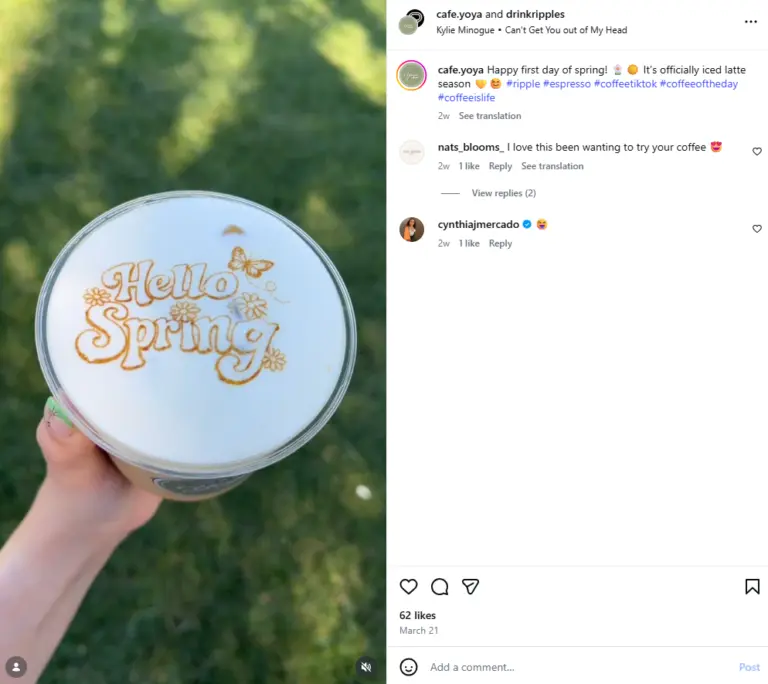
This isn’t theoretical. Across Ripples customers, on average, more than 60% of organic social media posts on business accounts come from customers themselves – people who got excited by a printed drink, took a photo, and shared it with their network.
That’s customers doing your marketing for you.
How You Measure Organic Social Media
Ask the questions below to understand if your organic social efforts are effective:
- How many customers post about us every week? (most important metric)
- Are people tagging us consistently?
- Are new customers mentioning they saw us on Instagram or TikTok?
- Are posts being shared or saved (not just liked)?
- Is this trending up month over month?
If these aren’t increasing, your organic social isn’t driving growth.
Finally – Ask The Right Questions (Not the Easy Ones)
Many agencies optimize for what’s easy to show, however smart business owners look for what actually matters – customers, revenue, growth. Everything else is noise.
You’re already spending money on social media. The question is whether it’s bringing you customers or just making your feed look good.
To learn more tips and tricks to attract more customers and boost your revenue
Get on the list!
"*" indicates required fields